Think about the sound of a basketball—that crisp thump-thump-thump on the court. That sound, along with the grip under your sneakers, isn’t an accident. A sports court is far more than just a slab of painted concrete; it’s a layered system where each component controls everything from ball bounce to player safety.
For those exploring backyard court ideas, the decision usually comes down to two popular types: the classic acrylic “hardcourt” or modern, interlocking “modular tiles.” Differentiating between them is the first step toward finding the perfect surface for your family to play on for years to come.
What Is a “Hardcourt”? The Layer Cake Beneath Your Feet
You’ve likely played on a hardcourt, even if you didn’t know the name. Think of it as a layer cake built for sports. The foundation is a solid slab of asphalt or concrete, providing a rigid base. On top, specialists apply thin but durable layers of an acrylic surface, which bonds to the base and provides the color and texture. This is the classic surface seen at parks, schools, and pro tennis tournaments like the US Open.
Its popularity stems from performance and price. The rigid base provides a true, consistent ball bounce, while also being the most cost-effective way to build a high-quality, long-lasting court. It offers professional-level play without the intense maintenance required by surfaces like natural grass or clay.
The slightly gritty texture you feel isn’t just paint. The final acrylic layers have a specific amount of fine sand mixed in, which is the secret to dialing in the court’s grip and speed. More sand creates a slower ball bounce and better footing, while less sand results in a faster game.
Modular Tiles: The “Lego” Court for Your Backyard
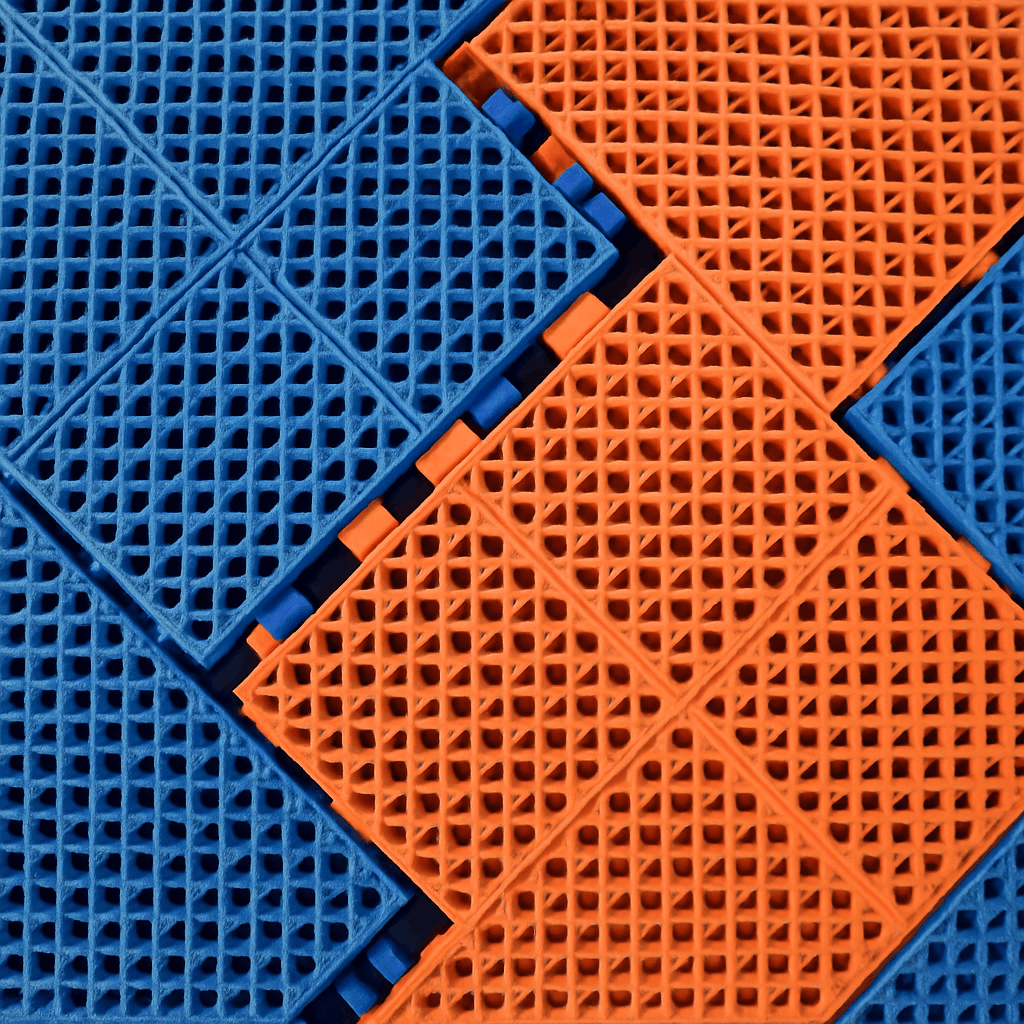
Instead of pouring concrete, imagine building your court with oversized Lego blocks. That’s the basic idea behind modular athletic court tiles. These are high-impact plastic squares that snap together securely, creating a durable surface over an existing base like a patio or compacted gravel. Their interlocking design makes them a favorite for DIY backyard court projects.
Modular tiles offer two key advantages: shock absorption and drainage. The plastic material has a natural flex that absorbs impact, making it gentler on the knees and ankles than a rigid hardcourt. Furthermore, most tiles have a perforated surface covered in small holes. This design is brilliant for drainage, as rain flows directly through the court instead of creating puddles, allowing play to resume quickly after a storm.
This built-in flexibility does create a different feel. The ball bounce on a modular court is typically lower and slower compared to the fast, true bounce of a hardcourt. It’s a trade-off: you gain significant comfort and all-weather usability in exchange for a slight change in performance.
Pickleball vs. Tennis: How Surface Texture Changes the Game
While a tennis hardcourt and a pickleball court can share the same foundation, their feel is surprisingly different. The secret is the specific amount of sand mixed into the final acrylic layers. This ingredient fine-tunes the surface for the unique demands of each sport.
For tennis, the goal is often a ‘fast’ surface that allows for powerful shots and sliding movements. A tennis court surface uses a mix with less sand, creating a smoother finish that lets the ball skid and maintain its speed after the bounce. Pickleball, with its quick, explosive movements in a smaller space, demands the opposite: maximum grip. A dedicated pickleball court is created with more sand, providing the essential traction players need to stop and start instantly.
Why Courts Crack and How “Resurfacing” Fixes Them
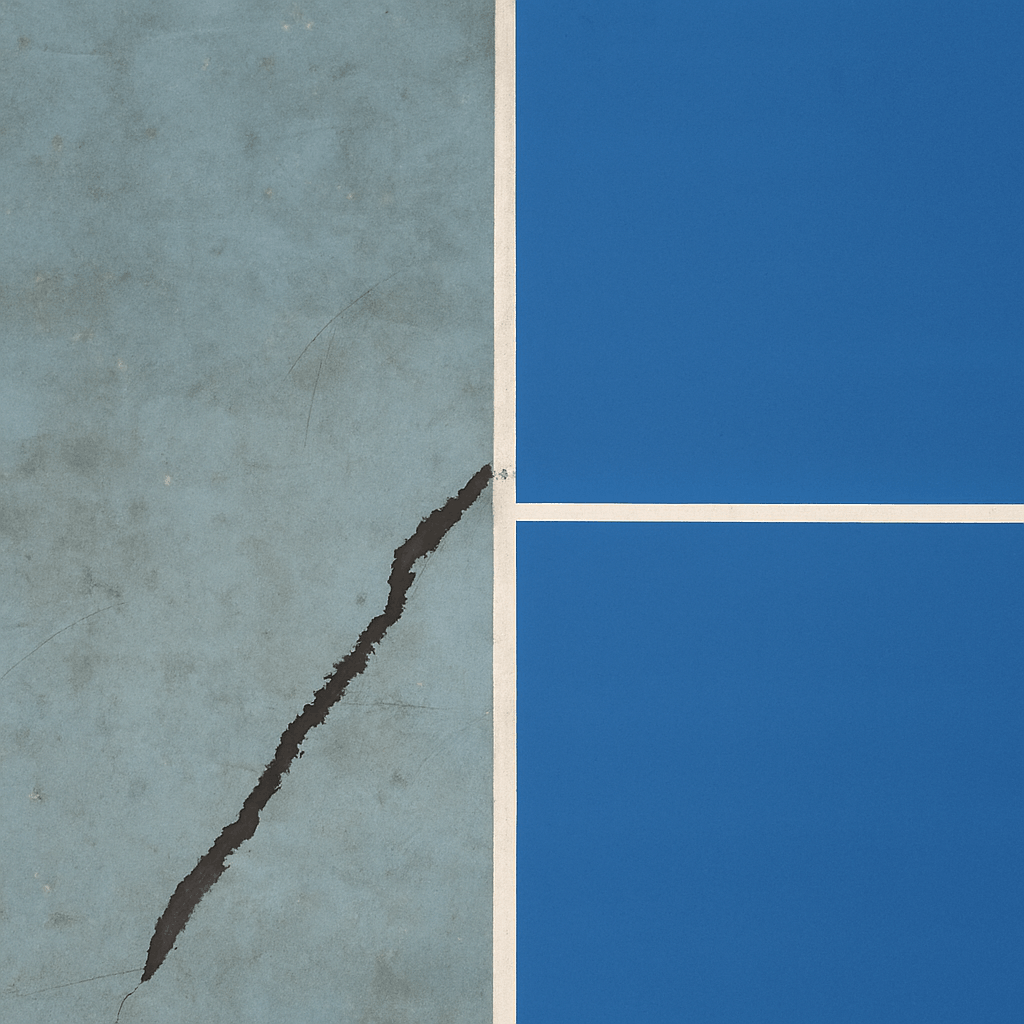
The spiderweb of cracks on an old court starts deep in its base. Like a sidewalk, the court’s concrete or asphalt foundation naturally expands in the heat and contracts in the cold. This powerful base movement is what eventually causes cracks to form from the bottom up.
Thankfully, the solution is resurfacing. First, specialists repair the court by cleaning and filling every fissure with a flexible crack filler. After the repairs set, one or more “resurfacer” coats are squeegeed across the court, creating a uniform layer that hides the repairs. Finally, new acrylic color and texture coats are applied, completely restoring the court.
This process is key to maintaining an outdoor playing surface for decades. While the cost to resurface a tennis court varies with its condition, it’s a fraction of a full demolition, making it an affordable way to make an old court look and play like new.
Upgrades: Designing a Cushioned, Multi-Sport Game Court
Once your court has a solid foundation, you can add upgrades to boost comfort and versatility. Cushioning is a popular choice, where special acrylic layers infused with rubber particles are installed beneath the color coats. Much like the insole of a running shoe, these layers absorb impact, making play easier on a player’s knees and back.
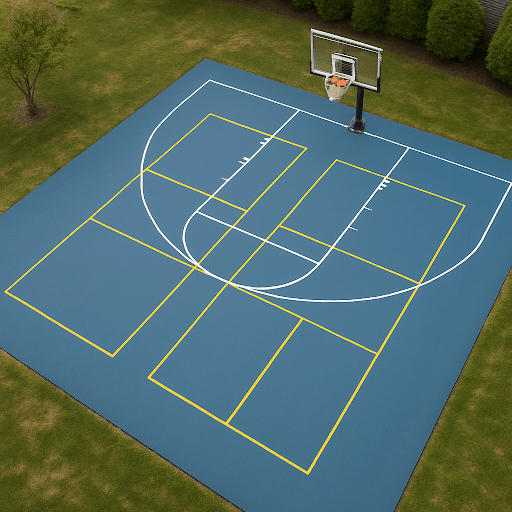
One of the best backyard athletic court design ideas is to create a multi-game layout. By painting lines for sports like pickleball or volleyball in contrasting colors over a basketball court, you transform a single-use area into a flexible hub for family activity. Combining a cushioned surface with a multi-sport layout creates a safer, more versatile play area that maximizes your investment.
Building Your Game Plan: Which Court Is Your Winner?
You now see the choices behind a sports court, not just the surface. Deciding on the right option for your backyard is a clear decision based on your priorities:
- Choose a Hardcourt if: Budget and a professional-style ball bounce are your top priorities.
- Choose Modular Tiles if: DIY installation, player safety, and all-weather use are most important.
Remember that even a worn surface isn’t a lost cause. Resurfacing can bring an old court back to life, saving you from a costly replacement. The next time you’re at a park, look closely. You can now identify the surface, spot old repairs, and understand exactly why it feels the way it does.