
Have you noticed it? That distinct pop-pop-pop sound drifting over from the local park, often coming from what used to be a little-used tennis court. Or perhaps a friend who swore they’d never be a “sports person” is suddenly obsessed with it. You’re not imagining things. The real story behind pickleball’s takeover is even crazier than you might think.
At its heart, pickleball is a friendly and addictive paddle sport that blends elements of tennis, badminton, and ping-pong. This simple combination has led to a stunning result: according to the Sports & Fitness Industry Association, it has been the fastest-growing sport in America for three consecutive years.
This surge isn’t just a small trend; it’s a nationwide phenomenon. This article explores the surprising story behind the statistics—revealing who is actually playing, where the boom is happening, and the three key reasons this quirky sport has captured the country’s attention.

Just How Many People Play Pickleball?
If you feel like you’re hearing about pickleball everywhere, you’re not imagining it. The sport has moved from a niche hobby to a mainstream phenomenon, and the official growth statistics are genuinely stunning. So, how many people play pickleball today?
The latest research from the Sports & Fitness Industry Association’s (SFIA) annual Pickleball Participation Report reveals a jaw-dropping figure: an estimated 36.5 million people played pickleball in the United States over the last year.
That number is more than the entire population of Texas. Imagine every single resident of the Lone Star State, from Houston to El Paso, picking up a paddle. That’s the incredible scale of the sport’s reach right now.
Perhaps even more impressive is the speed of this explosion. That 36.5 million figure represents a massive jump from just a few years ago, cementing pickleball’s status as the fastest-growing sport in America for the third year running. But who, exactly, makes up this new army of players?
Who Is Actually Playing Pickleball? (It’s Not Just for Retirees)
When you picture a pickleball court, you might imagine a group of active seniors enjoying a sunny afternoon. While that scene is certainly part of the story, the latest player demographics show the game’s appeal has exploded far beyond a single generation. The average player is getting younger every year.
According to the SFIA, the average age of a pickleball player has dropped to just 35. This surprising shift is driven by a massive influx of younger players who are discovering the sport in schools, at local parks, and through social media. Youth participation statistics are climbing so fast that they are completely reshaping the landscape of the sport.
This doesn’t mean older players are leaving the court; it means everyone else is joining them. The growth is happening across all age groups, but the surge is clearly led by the under-35 crowd. A quick look at the player base reveals:
- Players Under 24: The single largest and fastest-growing segment.
- Players 25-54: A huge demographic drawn to the social, competitive, and fitness aspects.
- Players 55+: The sport’s traditional heartland, who value its low-impact and highly social nature.
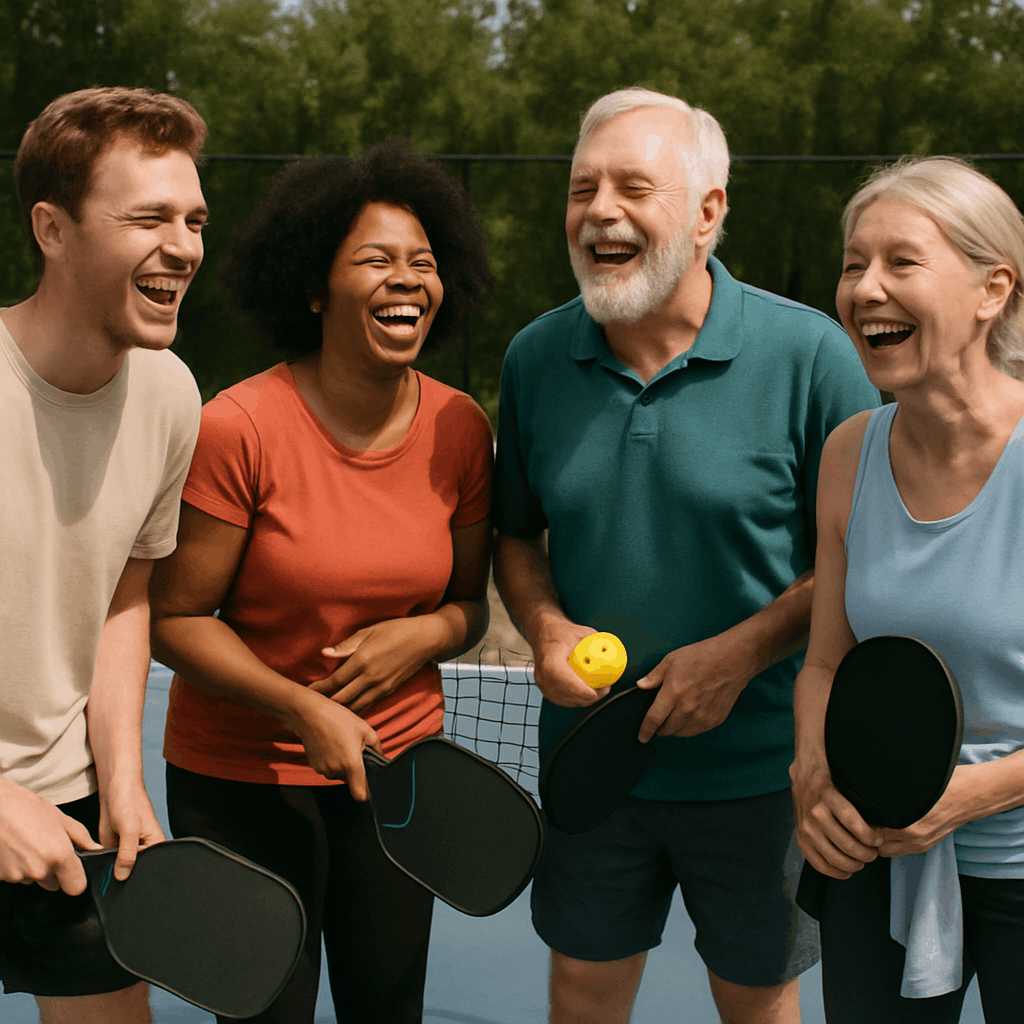
This is pickleball’s secret weapon: it’s one of the rare sports where grandparents, parents, and kids can all genuinely play together and have a great time. This unique, multi-generational appeal is a huge part of its success, and it all ties back to a few simple, almost addictive qualities of the game itself.
Why Is Pickleball So Addictive? The 3 Simple Reasons for Its Explosive Growth
What makes a sport so appealing to both a 19-year-old college student and a 65-year-old retiree? The secret isn’t a complex strategy or a grueling physical demand; it’s a simple formula built on accessibility and fun. The popularity of pickleball boils down to three core factors.
First, the barrier to entry is incredibly low. Unlike tennis or golf, where it can take dozens of lessons to feel competent, a complete beginner can learn the rules and be playing a real game of pickleball in under an hour. The underhand serve is simple to master, and the lightweight plastic ball moves slower, making rallies easier to sustain and far more rewarding for new players.
Second, the game’s design is intentionally social. A pickleball court is significantly smaller than a tennis court, placing players much closer together. This proximity fosters a constant, friendly back-and-forth, with laughter and conversation filling the space between points. It feels less like a head-to-head battle and more like a shared backyard activity.
Third, while you’re busy laughing, you’re also getting a fantastic workout. The health benefits are significant; players engage in quick, lateral movements and fast-paced volleys that elevate heart rates. Yet, because of the smaller court and lack of aggressive running, it’s far easier on the joints than tennis or basketball, making it a sustainable form of exercise for nearly any age or fitness level.
This powerful combination—easy to learn, naturally social, and surprisingly good exercise—is the simple formula fueling the sport’s incredible rise.
How Does Pickleball’s Popularity Compare to Tennis?
The rise of pickleball has naturally drawn comparisons to tennis, the established giant of racket sports. While tennis still boasts a larger base of total players, the story is in the growth. Think of it this way: if tennis participation is a large, steady river, pickleball’s is a tidal wave. According to the Sports & Fitness Industry Association, while tennis has seen respectable growth, pickleball’s player count has surged over 150% in the last three years alone.
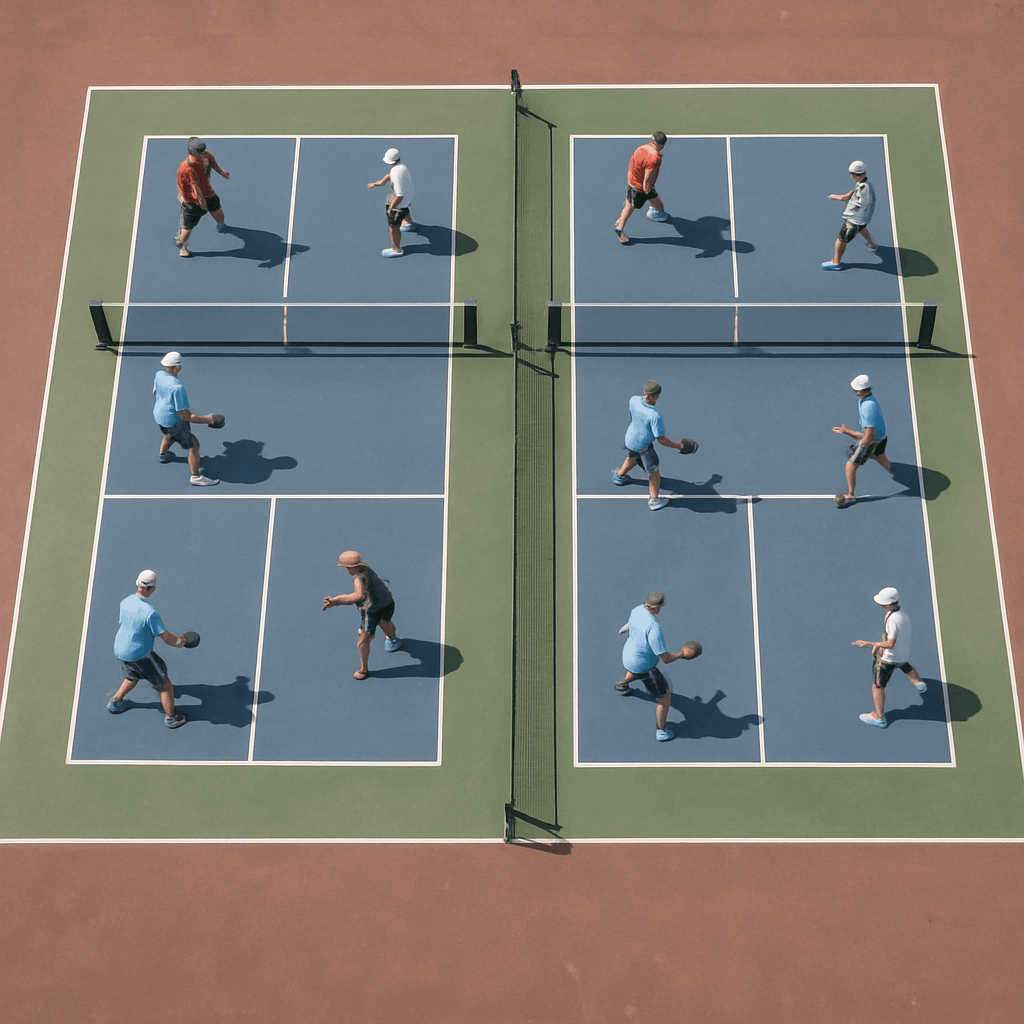
This explosive growth is amplified by simple geometry. One of the most telling facts in the pickleball vs. tennis debate is that you can fit four standard pickleball courts into the space of a single tennis court. This incredible efficiency is why so many local parks are taping new lines on their old courts. A single tennis court conversion can suddenly accommodate sixteen pickleball players at once, instead of just four tennis players.
This difference in court usage and growth rate is creating a friendly, but very real, rivalry for space in communities across the country. Parks and recreation departments are now tasked with balancing the needs of a long-established tennis community with the booming demand from new pickleball players. The two sports aren’t mutually exclusive—many people play both. But pickleball’s incredible rise isn’t just a fad; it’s a powerful force reshaping public recreational spaces.
What Does the Pickleball Boom Mean for the Economy and Your Town?
This explosion in popularity isn’t just a social shift; it’s a powerful economic force. The once-niche market for paddles, balls, and apparel has skyrocketed into a significant industry. According to industry reports, the market for pickleball gear is now valued at hundreds of millions of dollars annually. Every new player who buys a starter paddle set contributes to a rapidly expanding new sector of the sports economy.
All those new players need a place to play, creating an infrastructure crunch across the country as demand for courts far outpaces supply. Projections show that to keep up with current growth, the United States needs to build tens of thousands of new pickleball courts. This explains why so many communities are racing to convert underused tennis courts or budgeting for brand-new, dedicated pickleball facilities.
Beyond the park, this trend is reshaping local businesses. Dedicated indoor pickleball clubs, complete with pro shops and cafes, are becoming the new “it” destination in many suburbs. Tournaments, once small local gatherings, now draw thousands of players and spectators to host cities, filling up hotels and restaurants for a weekend. This direct economic impact is turning the sport from a simple pastime into a valuable source of local revenue.
Combining booming equipment sales, the rush for new construction, and tournament travel, the picture becomes clear. The pickleball craze is doing more than just getting people active; it’s creating jobs, driving investment, and changing the recreational landscape of towns big and small.
Is Pickleball a Fad or the Future of Fun?
That strange pop-pop-pop from the local park represents a cultural phenomenon backed by millions of players and record-breaking growth. It’s a story of connection, accessibility, and the simple joy of a game anyone can learn in minutes. This foundation helps answer the question, “is pickleball a fad?” While explosive growth can’t last forever, movements built on community and fun tend to stick around.
The pickleball growth trends point toward a permanent shift in recreation. The future of the sport isn’t just about more courts; it’s about reshaping how neighborhoods and families spend time together, proving that a game doesn’t need to be complex to have a massive impact.
The data shows a sport that’s building communities one game at a time, offering an open invitation to join in. The only question left is, are you ready to see what the excitement is all about?